
KITCHEN HOW-TO · 5 MIN READ
The Immersion Blender Technique Behind Smoother Soups & Sauces
A safer, cleaner blending sequence for controlling texture directly in the pot or beaker.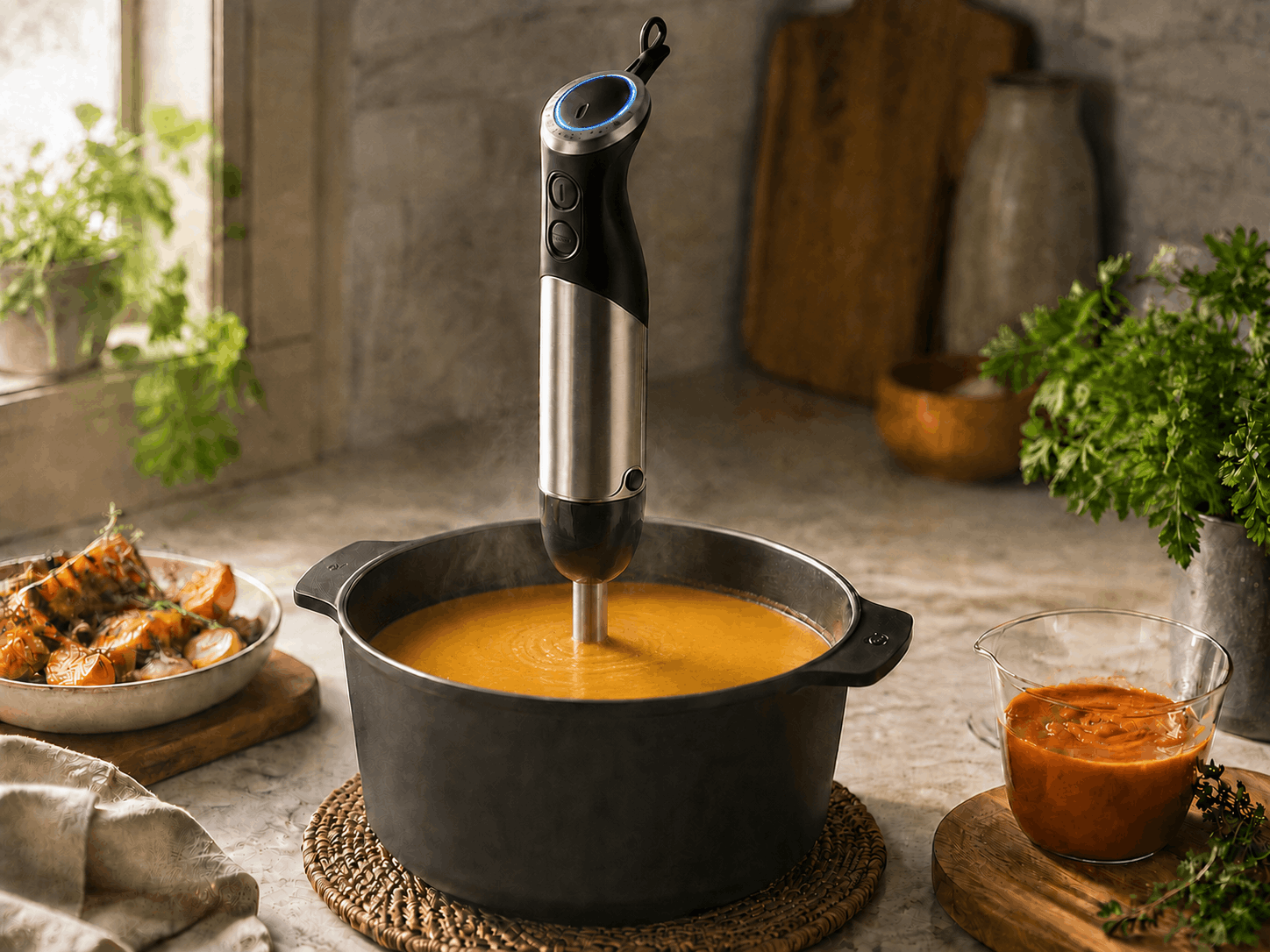
Immersion blending works best when the blending head stays fully below the liquid. Starting low and moving deliberately gives ingredients time to circulate through the guard while helping contain splashes.
SECTION 01
Set up the depth before the speed
Use a vessel deep enough for the batch and place the bell guard beneath the surface before switching on the motor. Only a short section of the metal shaft should remain visible above the soup or sauce.
Keep hands, utensils and loose clothing away from the pot. For hot food, follow the appliance instructions and use extra care with steam and splashes.
SECTION 02
Blend low, upright and slowly
Begin at a low setting with the shaft close to vertical. Move it gently around the pot rather than lifting the head through the surface.
Once large pieces are broken down, increase speed gradually if the recipe needs a finer finish. Turbo is best reserved for short moments when the tool and ingredients are stable.
- Submerge first
- Start at a lower speed
- Keep the head below the surface
- Stop the motor before lifting
SECTION 03
Finish the texture in stages
Pause and check consistency instead of blending continuously. A soup can move quickly from lightly textured to completely smooth, and sauces may thicken as ingredients emulsify.
Unplug before removing the shaft. Detach and clean food-contact parts according to the product instructions, while keeping the motor body away from water.
Submerge, start low, move slowly and stop before lifting—the sequence matters as much as the motor.